
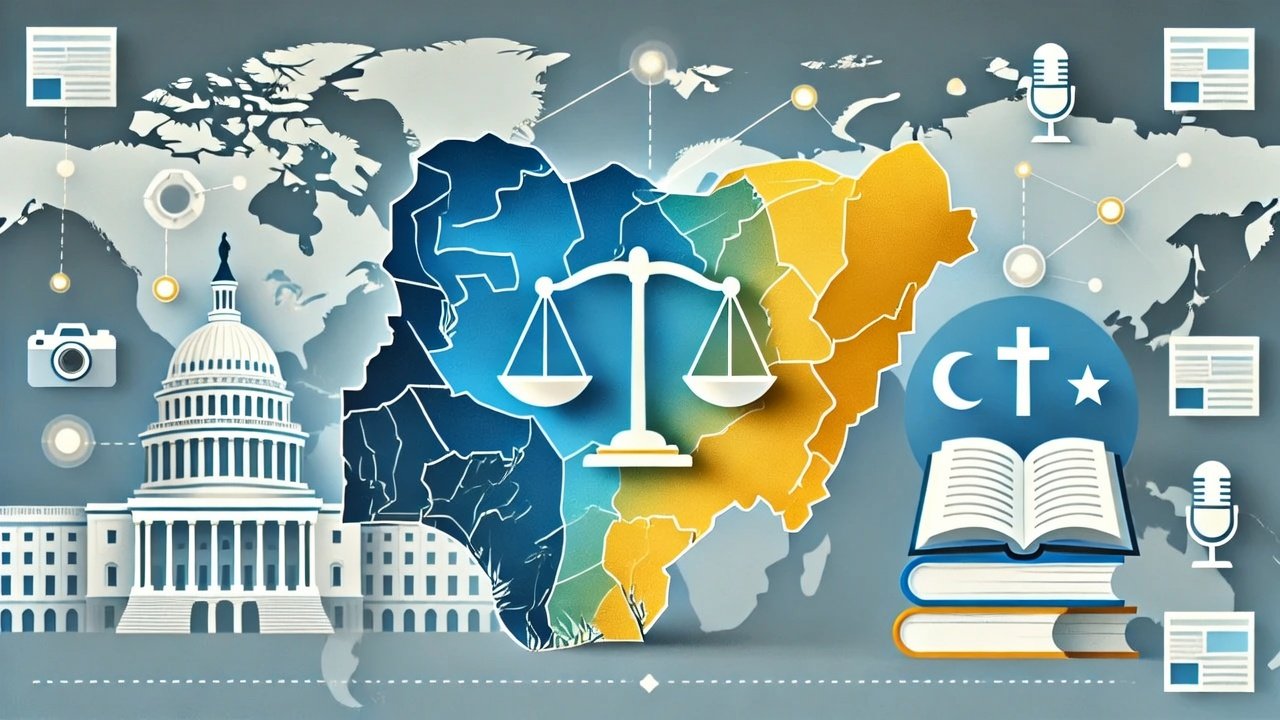
As lawmakers in the United States weigh legislation aimed at documenting and responding to religious persecution and mass atrocities in Nigeria, a deeper, long-term look at the conflict reveals complex layers of history, competing narratives, and unanswered questions that go far beyond simple labels.
The Nigeria Religious Freedom and Accountability Act of 2026, introduced in the U.S. House of Representatives, asks the U.S. Secretary of State to annually report to Congress on efforts to counter violence reported particularly against Christian communities in Nigeria.
It also prompts a review of whether armed groups — including Fulani ethnic militias — should be designated as Foreign Terrorist Organizations, and whether American aid influences conditions on the ground.
Why This Matters: Historical and Contemporary Context
Nigeria — Africa’s most populous nation — has a long history of religious and ethnic violence, not all of which neatly fits within simple religious classifications.
Violent clashes between Christian and Muslim communities date back decades, including significant riots such as the 2001 Jos clashes, where around 1,000 people were killed.
More recently, rural communities across central and northern states have suffered devastating attacks blamed on a mix of armed Islamist groups like Boko Haram and Islamic State West Africa Province (ISWAP), as well as local militias linked to herder–farmer conflicts involving Fulani cattle herders.
In June 2025 thousands were displaced and dozens killed in episodes like the Yelwata massacre, reflecting the severe challenges faced by local villages.
Conservative estimates from monitoring groups claim tens of thousands of Christians have been killed over the past decade, but the precise figures remain contested — partly because of data challenges, differing methodologies, and disputes about motivations behind particular attacks.
Key Questions at the Heart of the Debate
1. What Is the “Target” of U.S. Policy?
The bill’s sponsors argue it targets religious persecution and mass atrocities — not the Nigerian state itself.
However, critics ask whether singling out Nigeria reflects political motivations, biases in U.S. discourse, or an oversimplification of complex ethnic, economic, and security issues.
Many attacks attributed to Fulani herders and Islamist militants are rooted in resource competition, climate stress, and governance failures, even though religion often becomes intertwined with conflict narratives.
2. Is Nigeria Cooperating — or Is This U.S. Action Overshooting Its Mark?
The Nigerian government has repeatedly pushed back against external labels suggesting systemic religious persecution, warning that such narratives oversimplify security challenges and create diplomatic friction.
In late 2025, Nigeria rejected a U.S. designation as a “Country of Particular Concern,” calling the data behind the decision faulty and emphasizing terrorism — not religious targeting — as the root problem.
Despite tensions, the two countries have coordinated on security operations, including U.S.-supported airstrikes against Islamist militants in late 2025, which Abuja confirmed were conducted with intelligence and approval from Nigerian authorities.
3. Who Is Feeding the Information to America, and Under What Influence?
Information shaping U.S. legislative debates comes from a broad mix of sources — advocacy groups, religious freedom watchdogs, diaspora testimonies, human rights reports, and international NGOs — each with different priorities.
Congressional hearings have included testimony from Nigerian faith leaders and civil society voices who portray entire regions as under siege.
Yet some analysts and communities caution that data can be skewed or misinterpreted, especially when framing conflicts that are simultaneously economic, ethnic, and religious.
Social media reactions also reflect deep division in how Nigerians themselves view these narratives: some see them as propaganda, others as overdue acknowledgment of suffering.
4. Has Something Like This Happened Before?
Yes. The U.S. has previously debated Nigeria’s role in religious violence, including earlier bills and resolutions passed in Congress, drawn from periods when Nigeria was cited for high levels of faith-based killings.
These discussions predate the 2026 measure and have shaped policy debates for years.
Moreover, global attention to religious freedom often follows patterns seen in other countries where ethnic, tribal, or ideological violence intersects with faith identities — from the Balkans in the 1990s to parts of the Middle East and South Asia.
These comparisons underline the importance of precise definitions, careful data, and balanced diplomacy.
Global Reactions and Internet Voices
Online reactions are deeply divided:
- Many outside observers and diaspora communities amplify the narrative of Christian persecution and calls for accountability.
- Some critics argue these narratives misrepresent the root causes of violence and risk oversimplifying Nigeria’s security crisis.
- Others frame the violence as part of broader herder–farmer and governance breakdown issues, with religion sometimes used as a proxy for deeper frustrations.