
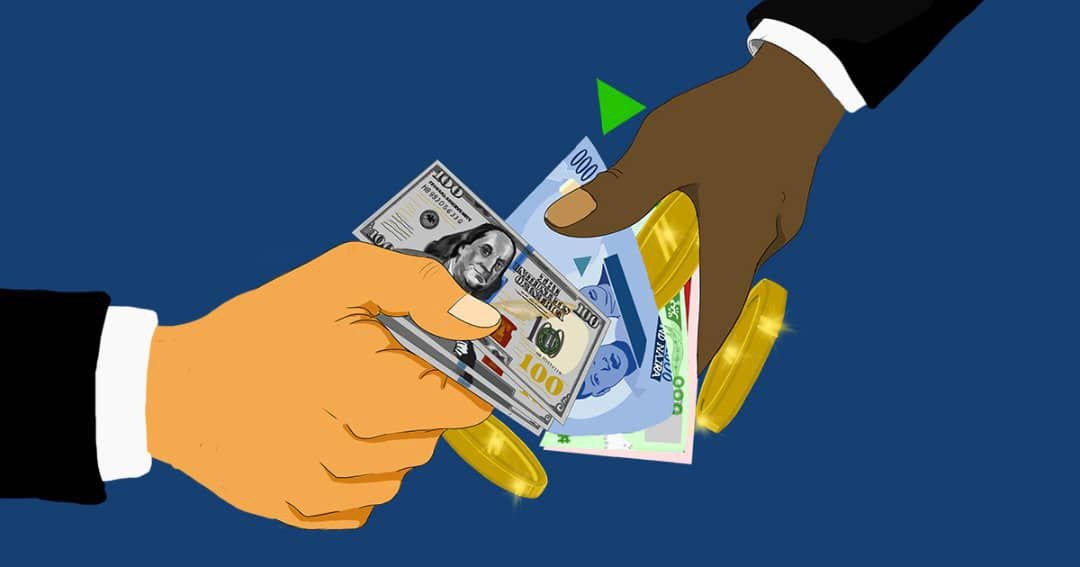
Global forecasters made bold bets on where the naira would settle in 2025. A few saw it coming. Many missed the mark. For a currency long defined by delayed corrections, sharp volatility, and disorderly devaluations, the Nigerian naira defied expectations this year: it strengthened.
After a punishing 41 percent plunge in 2024, many had written off the naira’s chances of stability, let alone appreciation. But as 2025 draws to a close, the official exchange rate hovers around ₦1,400 to the U.S. dollar, having climbed from as weak as ₦1,660 a year earlier. Even the country’s once-roguish parallel market — a barometer of black-market liquidity and investor sentiment — has calmed, now trading within 2–3 percent of the official rate.
It is a story of policy overhauls, investor recalibration, and, perhaps, unexpected credibility from the country’s central bank. The decision of the government of President Bola Tinubu in mid-2023 to float the naira and abolish costly fuel subsidies laid the groundwork. But it took nearly two years of staying the course, amidst hostile media reception and deep public scepticism for the naira to stabilise. By mid 2025, the gains had become undeniable.
A Year of Turning Points
The year began with anxiety. The naira flirted with ₦1,600 in early March, as oil prices slumped and inflation lingered. Yet, by July, the currency stabilized near ₦1,530, bolstered by the Central Bank of Nigeria’s (CBN) tight monetary stance, rising reserves, and the gradual return of portfolio investors.
Then came the rally.
In late October, the naira broke decisively through the ₦1,500 threshold, rallying to ₦1,421 on the official market by November 1. The street rate followed, dipping to ₦1,460 — its closest alignment with official rates in over a decade.
Exchange Rate Forecasts for the Naira in 2025 – Who Got it Right?
One notable local economist who weighed in early was Bismarck Rewane, CEO of Financial Derivatives Company. As reported by Arbiterz, Rewane projected in early 2025 that the naira would stabilize around ₦1,450–₦1,500 per dollar by year-end, citing improving monetary coordination, external reserves, and a shift in FX supply channels. His call was underpinned by expectations of a narrowing gap between official and parallel markets, and greater investor confidence.
Outcome: Rewane’s projection turned out to be one of the most accurate local forecasts. The official NAFEM rate ended 2025 near ₦1,430–₦1,450, placing his estimate within a 1–2% margin of actual performance. His early emphasis on convergence and policy discipline anticipated key trends others underestimated.
Analysts’ projections for Nigeria’s exchange rate in 2025 reflected deep uncertainty. Some foresaw a sharp rebound; others braced for another collapse. The naira’s actual path — a rare instance of appreciation and stability — delivered surprises across the spectrum.
- Goldman Sachs (Feb 2024): Forecasted ₦1,200/$, with upside to sub-₦1,000. Believed in a 25%+ rally driven by reforms and capital inflows. Outcome: Too optimistic. The naira never reached that strength.
- J.P. Morgan (Apr 2025): Forecasted ₦1,450/$, citing successful reforms and rising reserves. Outcome: Accurate. The naira hovered around ₦1,430 by late 2025.
- Citigroup (Oct 2024): Forecasted ₦1,800/$, based on bearish oil assumptions. Outcome: Too bearish. The naira strengthened, not weakened.
- Bank of America (Mar 2024): Forecasted ₦1,500/$. Called for modest appreciation. Outcome: Slightly conservative. The naira outperformed.
- IMF and World Bank: Gave no numeric forecasts but emphasized reform traction. Outcome: Their policy-focused guidance aligned with the naira’s recovery.
- PwC Nigeria (Jan 2025): Emphasized stability from FX reforms. NESG cited ₦1,300 average. Outcome: Directionally right but too bullish on magnitude.
- Standard Bank (multiple revisions): Ended with ₦1,458.8 forecast in Oct 2025. Outcome: Extremely close to the official rate by Nov.
- Afrinvest (Jan 2025): Estimated fair value at ₦1,804.45. Outcome: Far off. Naira proved much stronger.
- CardinalStone (Jan 2025): Estimated fair value at ₦1,720.88. Outcome: Slightly pessimistic. Naira was stronger.
- Coronation Research (Feb 2025): Scenarios from ₦1,230 to ₦2,200. Outcome: Base case (₦1,750) too weak; optimistic scenario nearly matched actual rate.
- FSDH Capital (mid-2025): Forecasted ₦1,595. Outcome: Conservative. Naira closed 10–15% stronger.
- Vetiva & CSL: Offered qualitative guidance; stable-to-firm naira assumed. Outcome: Broadly in line.
- Veriv Africa: Predicted black market ~₦1,790. Outcome: Actual ~₦1,430. Spread narrowed far more than expected.
- Comercio Partners (Feb 2025): Projected the naira could depreciate to ₦1,700/$ by mid-2025, citing deep policy fragmentation, overreliance on Eurobonds, and limited export capacity. The Lagos-based investment firm warned that the lack of coordination between fiscal and monetary authorities would undermine stabilization efforts.
Outcome: Too bearish. The naira held firm at ₦1,430–₦1,450 by year-end, outperforming Comercio’s expectations. While the firm’s structural concerns were valid, it underestimated the impact of CBN tightening and reform-fueled inflows.
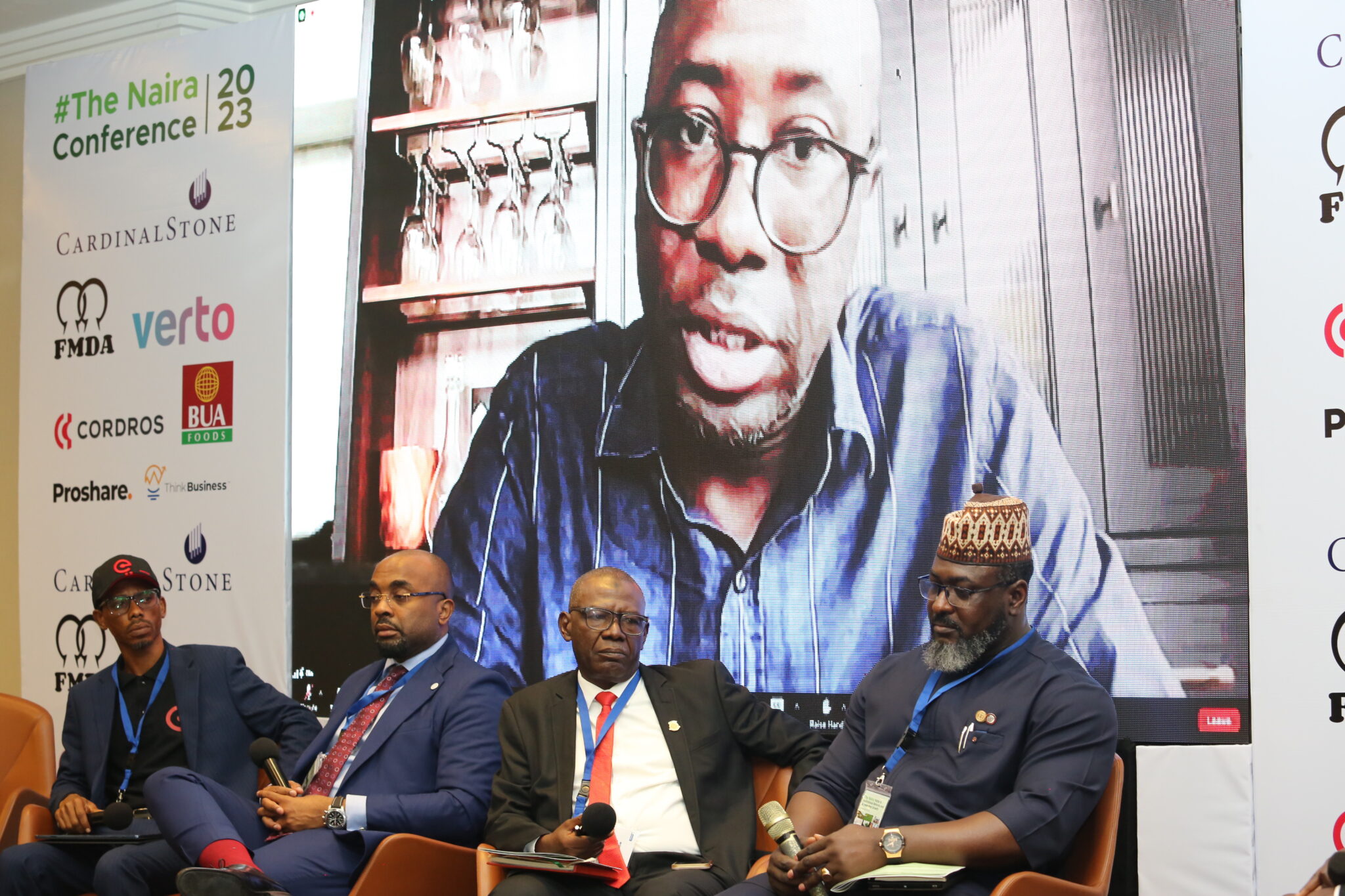
Naira-Dollar Exchange Rate in 2026: What Nigerian Business Leaders Expect
In the last quarter of 2025, some of Nigeria’s most influential business figures made notable statements forecasting the naira’s direction into 2026 — and their views shared a common theme: cautious optimism fuelled by reform gains and domestic production.
Aliko Dangote, President of Dangote Group, was emphatic in his belief that the naira would continue to strengthen. In October, he urged Nigerians to offload their dollar holdings, saying: “If I have dollars today, I would rather sell [them] than wait [another] month.” He attributed the naira’s firming trend to the positive impact of his new refinery and its role in cutting dollar demand for fuel imports: “You would have ended up buying dollars at a ridiculous rate not at ₦1,455” had refining not been localized.
Abdul Samad Rabiu, Chairman of BUA Group, offered a forecast of ₦1,300–₦1,400 per $ by year-end, calling it a sign of national progress: “We expect that the [exchange] rate is going to strengthen even further… which we should all celebrate.” Citing reduced reliance on CBN forex allocations and increased supply via autonomous channels, Rabiu praised the administration’s economic reforms for enabling “a stronger economy [and] a more stable currency.”
Tony Elumelu, Chairman of UBA, expressed a similar sentiment earlier in the year, calling the naira’s steadiness “a major boost for business” and urging that this “newfound stability” continue.
These voices from the private sector — typically cautious in their public remarks — reflect a growing belief that if reforms are maintained, the naira could strengthen further in 2026, and may even consolidate its convergence with the parallel market. The convergence seen by late 2025 was, in their view, not a fluke but a sign of structural progress.

The range of forecasts shows how unpredictable Nigeria’s FX trajectory can be — and how crucial reforms, liquidity, and investor confidence are. The analysts who accurately incorporated these dynamics got it right. Others, whether overly bearish or unrealistically bullish, missed the mark.
As Nigeria moves into 2026, the credibility earned in 2025 will be tested. But for one year, the naira — long seen as fragile — delivered a rare and powerful surprise.