
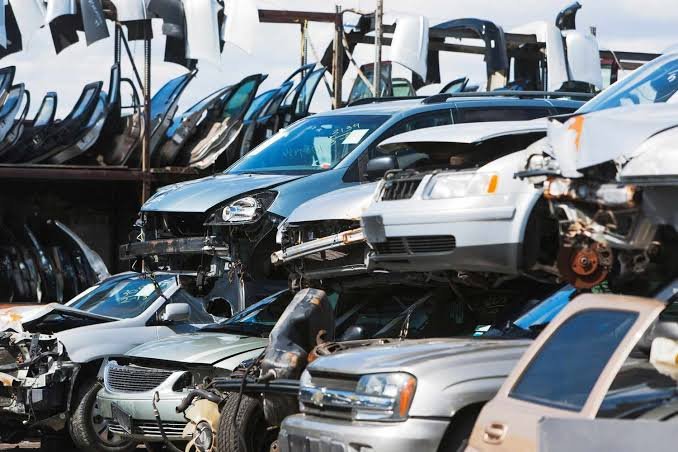
Nigeria’s Federal Government is set to formalise the country’s largely informal vehicle recycling sector from 2026, a move projected to generate more than ₦150 billion annually while improving road safety and environmental standards.
The National Automotive Design and Development Council (NADDC) disclosed that the initiative will be anchored on a newly approved End-of-Life Vehicle (ELV) programme, which will regulate how obsolete and unroadworthy vehicles are dismantled, recycled, or disposed of across the country.
According to NADDC Director-General, Joseph Osanipin, vehicle owners will be required to pay a modest recycling fee during registration.
The funds will support a structured system for the safe handling of vehicles that have reached the end of their useful life — a practice already common in developed auto markets.
Osanipin explained that studies by the council show over 85 per cent of components from end-of-life vehicles remain reusable or recyclable, presenting a major opportunity to build a sustainable circular economy.
He noted that Nigeria’s thriving “Belgian parts” market demonstrates the strong demand for refurbished components, which the new policy aims to formalise and regulate.
Beyond revenue generation, the ELV programme is expected to create thousands of jobs across vehicle dismantling, parts refurbishment, logistics, and resale chains, while reducing the number of abandoned vehicles on Nigerian roads.
As part of broader reforms, the government will also introduce mandatory pre-export certification for used vehicles imported into Nigeria from 2026.
This measure is designed to prevent the dumping of rusted or unroadworthy vehicles into the country — a loophole Osanipin said has made Nigeria attractive to exporters seeking to offload end-of-life cars for profit.
Importers will only be allowed to bring in vehicles that meet approved international standards.
The policy reforms come amid a recovery in Nigeria’s auto import market, with passenger vehicle imports rebounding in 2025 following improved foreign exchange stability.
However, officials say tighter regulations are necessary to balance demand with safety, environmental protection, and local industry growth.
In parallel, the NADDC is advancing plans to convert petrol and diesel vehicles to compressed natural gas (CNG) and electric power, alongside nationwide training programmes on EV maintenance and alternative fuel systems.
National certification standards for EV and CNG conversion are expected to take effect by 2026.

Osanipin also revealed that the Federal Government is moving to back the National Automotive Industry Development Plan with legislation, as a draft Auto Industry Bill is being prepared for submission to the National Assembly.
He described 2026 as a turning point for Nigeria’s automotive sector, urging public understanding as reforms take effect, adding that a regulated recycling ecosystem would not only boost revenue but also strengthen local manufacturing, skills development, and environmental sustainability.