
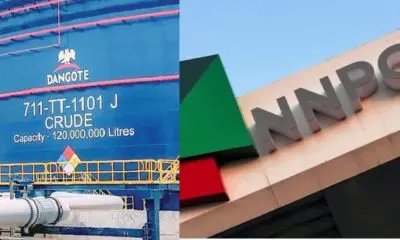
Is Dangote Refinery’s Strategy Anti-Competitive?
The Credit Offered
On its own, offering credit to customers is not inherently anti-competitive. In functioning markets, supplier credit can enhance efficiency, reduce transaction frictions, and ease liquidity constraints for downstream operators. However, the competition concern here does not arise from credit in isolation, but from bundling.
Dangote Refinery is not merely extending short-term financing to petrol stations. The 10-day credit facility is bundled with sharply reduced gantry prices, free direct delivery, and supply certainty, creating an integrated commercial package that rivals—particularly import-dependent marketers—are structurally unable to replicate. When credit is bundled in this way by a dominant player with superior financial capacity, it can move beyond a neutral commercial incentive and function as a market foreclosure mechanism.
By easing working-capital pressures for petrol station owners, the bundled credit effectively anchors retailers to Dangote’s supply chain at a moment when alternative suppliers face significantly higher costs. Importers contend with foreign exchange exposure, shipping and port charges, financing costs, and regulatory fees. Replicating a 10-day credit window together with low pricing and free logistics would, for many competitors, be commercially impossible.
In competition-law analysis, this form of bundling raises the risk of exclusionary conduct. While each component—credit, logistics support, or competitive pricing—may be lawful on its own, their combined deployment can materially reduce customer switching, reinforce dependency, and weaken alternative supply channels without reflecting superior efficiency.
The Price Cuts
The antitrust concern is intensified by the scale and persistence of Dangote’s price reductions. The refinery’s decision to cut ex-depot petrol prices to ₦699 per litre follows repeated downward adjustments and comes against the backdrop of a public admission by Aliko Dangote that the refinery is currently operating at a loss.
Sustained pricing below an economically sustainable level by a dominant, vertically integrated firm aligns closely with the classical definition of predatory pricing. The competition risk is not the immediate benefit of lower prices to consumers, but the strategic pattern: absorbing short-term losses using superior financial muscle, undermining rivals that cannot sustain comparable losses, and potentially recouping those losses once competition has been eliminated.
Importers and independent marketers, already exposed to foreign exchange volatility and high logistics costs, are structurally ill-equipped to withstand prolonged loss-led pricing. When below-cost pricing is bundled with credit and free logistics, the cumulative foreclosure effect becomes stronger and more difficult for rivals to counter through normal competitive means.
In jurisdictions with robust competition enforcement, regulators would typically scrutinise whether such pricing reflects genuine cost efficiencies or deliberate loss-leading designed to foreclose the market. Where bundling, loss-making prices, and dominance coincide, the threshold for regulatory intervention is substantially lower.
Potential Impact on Consumers
In the short term, consumers are clear beneficiaries of Dangote Refinery’s strategy. Lower gantry prices translate into reduced pump prices, easing transport costs, household energy expenses, and inflationary pressure across the economy. Improved supply certainty may also reduce fuel scarcity, queues, and price dispersion across regions.
However, competition law is concerned not only with immediate price effects but with long-term consumer welfare. If sustained loss-making pricing and bundled incentives drive competing importers and marketers out of the market, consumers could ultimately face fewer choices, reduced supply resilience, and heightened vulnerability to future price increases. Once competitive constraints weaken, a dominant supplier may have greater latitude to raise prices above competitive levels or alter supply terms.
There is also a systemic risk. Heavy retailer dependence on a single supplier’s credit and logistics ecosystem could magnify the impact of any operational disruption, regulatory dispute, or supply shock. In such a scenario, consumers would bear the cost through sudden price spikes or fuel shortages.

From this perspective, the immediate consumer gains from lower petrol prices must be weighed against the longer-term risk of market concentration and reduced competitive discipline—precisely the trade-off that competition authorities are designed to assess.
Structural Risk to the Downstream Market
For Nigeria’s downstream petroleum sector, the risk is ultimately structural rather than immediate. Petrol station owners and consumers may benefit in the short term from lower prices and improved cash flow. However, widespread reliance on a single supplier’s bundled pricing, logistics, and credit ecosystem could reduce supply diversity, entrench dominance, and expose consumers to future price increases once competitive constraints weaken.