
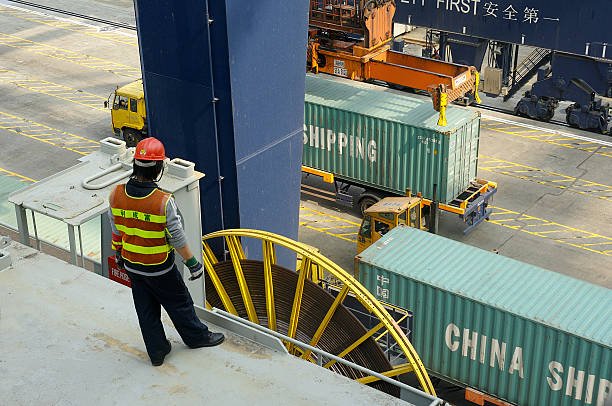
China’s economy expanded by 4.8% in the third quarter, its slowest pace in a year, as fragile domestic demand left the country leaning heavily on exports to sustain growth.
While this performance aligns with Beijing’s 5% annual target, analysts warn that the country’s increasing dependence on external markets amid escalating trade tensions with the United States exposes its long-term vulnerabilities.
Beijing appears eager to frame the growth figure as a sign of resilience ahead of critical diplomatic engagements between Vice Premier He Lifeng and U.S. Treasury Secretary Scott Bessent in Malaysia, and a possible meeting between Presidents Donald Trump and Xi Jinping in South Korea. Yet, the surface-level strength hides domestic frailty, as consumer demand remains sluggish, forcing Chinese manufacturers into cutthroat global competition.
Exporters like Jeremy Fang, who sells aluminium products abroad, illustrate this struggle. “My firm lost 20% of revenue even though we increased sales in Latin America, Africa, Southeast Asia, Turkey, and the Middle East,” he said, citing an 80–90% plunge in U.S. orders. Fang, now learning Spanish to win clients in emerging markets, says the competition is fierce: “If your price is $100 and the customer starts bargaining, it’s better to drop $10–$20 and take the order. You can’t hesitate.”
This race to the bottom on pricing has forced many manufacturers to cut wages and jobs, weakening local consumption further. Industrial output rose 6.5% year-on-year in September, but retail sales slowed to 3%, the weakest pace in ten months. Meanwhile, home prices fell at their fastest rate in nearly a year, and property investment plunged 13.9% in the first nine months of 2025, deepening the property crisis.
“China’s growth is becoming increasingly dependent on exports,” said Julian Evans-Pritchard of Capital Economics, warning that the trend is unsustainable without stronger consumer spending. Policymakers are under growing pressure to rebalance the economy as the Communist Party prepares for a key meeting to finalize the next five-year development plan.
That plan is expected to emphasize technological self-reliance and industrial upgrades, priorities tied to national security that could once again sideline households in China’s growth strategy. Analysts note this approach might preserve export strength but prolong the imbalance between manufacturing and consumption.

Despite a 27% drop in exports to the U.S., China’s trade diversification is evident: shipments to the EU rose 14%, Southeast Asia 15.6%, and Africa 56.4%. Beijing’s control over rare earth production has also become a bargaining chip against Washington, even as Trump threatens 100% tariffs on Chinese goods. Hedge fund manager Yuan Yuwei believes China can endure longer than the U.S.: “At worst, people may tighten their belts. But in the U.S., if you cut salaries, people protest.”
China’s economy grew 5.2% in the first nine months of 2025, and policymakers may boost infrastructure investment if growth falters in Q4, especially as they frontload 2026 debt issuance. While ING’s Lynn Song sees “less policy urgency,” she warns that weak confidence, soft consumption, and a worsening property slump remain pressing risks that could drag momentum further.