
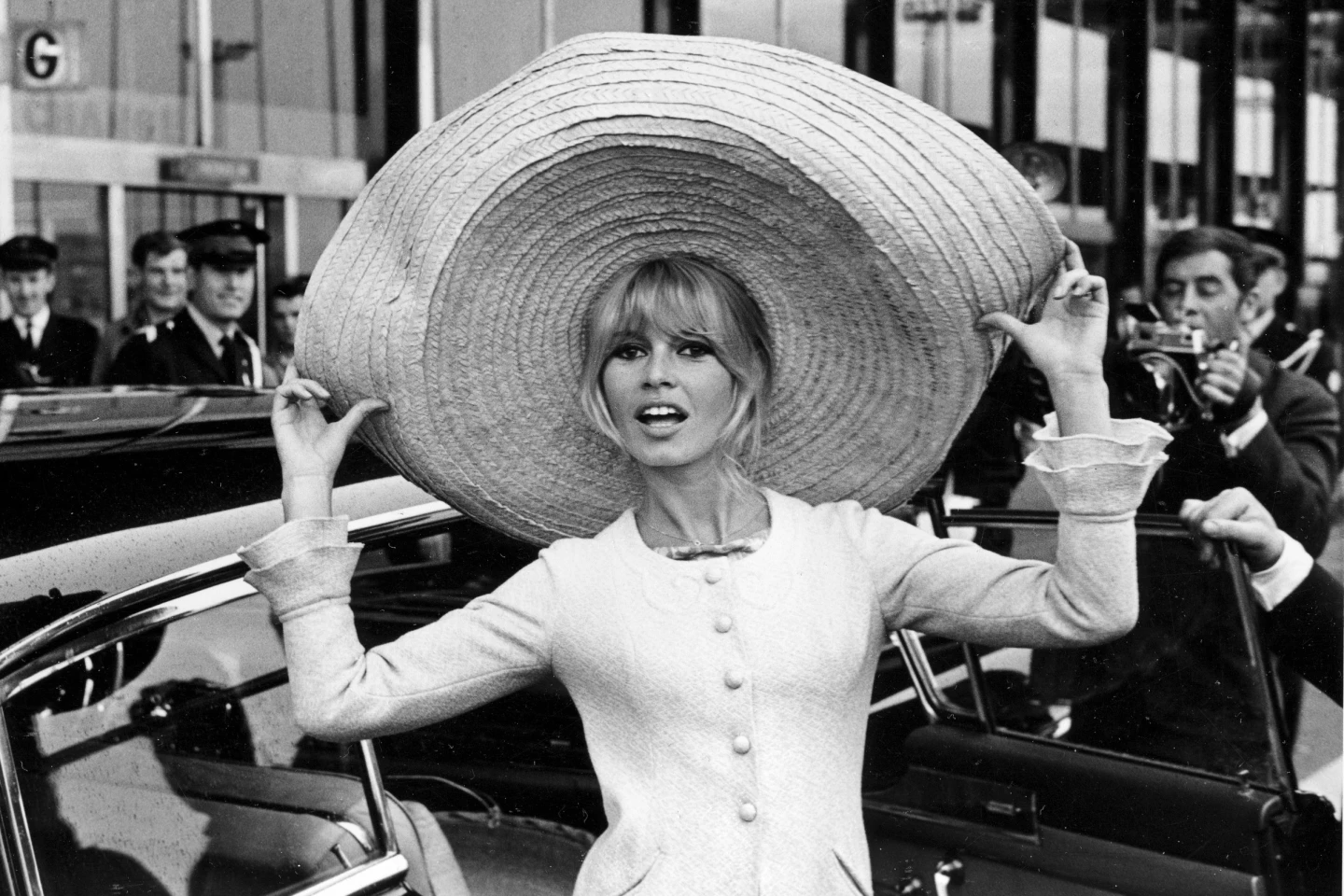
Bardot and the birth of modern celebrity
Few screen figures altered the grammar of cinema and celebrity as decisively as Brigitte Bardot. Rising in the 1950s, peaking through the 1960s, and retiring abruptly in 1973, Bardot’s film career was comparatively short. Yet her impact — on acting, fashion, sexual politics, and the economics of stardom — proved unusually durable, extending far beyond the era in which she last appeared on screen.
This is the story of Bardot’s life in cinema, from her first roles in early-1950s French films to the afterlife of her image and influence up to 2025.
1952–1955: Early roles and the construction of a screen persona
Bardot entered film in 1952 after early success as a fashion model. Her initial roles were small and conventional, shaped by a French studio system still emerging from the Second World War. Yet even in minor parts, critics and producers noted her camera presence — informal, physical, and unpolished compared with the classical acting style of the period.
These early appearances coincided with the growth of illustrated magazines and celebrity photography, allowing Bardot’s image to circulate beyond cinema itself. By the mid-1950s, she was already more visible than her filmography alone would suggest.
1956–1959: And God Created Woman and international explosion
Bardot’s career — and global reputation — changed irrevocably with And God Created Woman (1956), directed by Roger Vadim. The film transformed her into an international sensation, especially in the United States, where it provoked censorship battles and intense debate.
What mattered was not simply notoriety, but rupture. Bardot’s performance reframed female sexuality on screen: playful rather than tragic, instinctive rather than refined. In the process, she became one of the first European actors whose fame functioned at a genuinely global scale.
By the end of the decade, “Bardot” was no longer just an actress’s name; it was shorthand for a new cultural mood.
1960–1966: Stardom meets European auteur cinema
The early to mid-1960s marked Bardot’s most artistically consequential period. Rather than retreat into formula, she worked with some of Europe’s leading directors, allowing her celebrity to become part of the films’ meaning.
Key works include:
-
La Vérité (The Truth) (1960), a courtroom drama that delivered her most widely praised dramatic performance and demonstrated her range beyond erotic symbolism.
-
Vie privée (A Very Private Affair) (1962), a film about the pressures of celebrity that mirrored Bardot’s own experience.
-
Le Mépris (Contempt) (1963), directed by Jean-Luc Godard, where Bardot’s star image was dissected within a self-aware meditation on cinema, commerce, and marriage.
-
Viva Maria! (1965), opposite Jeanne Moreau, which reinforced her box-office power while exporting European cinema’s glamour worldwide.
During this phase, Bardot became central to a new phenomenon: the star whose public image is consciously used as narrative material. Her body, fame, and media saturation were not incidental — they were integral to the films themselves.
1967–1973: Disillusionment and withdrawal
By the late 1960s, the costs of Bardot’s fame were becoming increasingly visible. Intense media scrutiny, invasive photography, and personal strain fed into her growing dissatisfaction with acting and public life.
She continued to make films into the early 1970s, but the sense of creative momentum faded. In 1973, after completing her final screen appearances, Bardot retired from acting altogether — a decisive and permanent exit that surprised contemporaries and remains unusual for a star of her magnitude.
After cinema: activism, controversy, and cultural permanence (1974–2025)
After leaving film, Bardot redirected her public life toward animal welfare, founding the Brigitte Bardot Foundation in 1986. This phase gave her a new identity, distinct from cinema but no less visible.
At the same time, her later decades were marked by political controversies that complicated her legacy, particularly in France. As a result, assessments of Bardot in the 21st century have remained sharply divided.
Yet on screen, her influence never receded. Her films continued to be restored, screened, and studied; her image persisted in fashion, photography, and popular culture; and her name remained a reference point for discussions about fame, gender, and media power.

A short career with a long shadow
Between 1952 and 1973, Brigitte Bardot made fewer than 50 films. By conventional measures, this is a modest output. But measured by cultural impact, her career was seismic.
Bardot did not merely act in films; she changed how cinema represented desire and how the modern world understood celebrity. Long after she left the screen — and well into 2025 — her image continued to function as both symbol and argument: about freedom, exploitation, fame, and the price of being seen.