
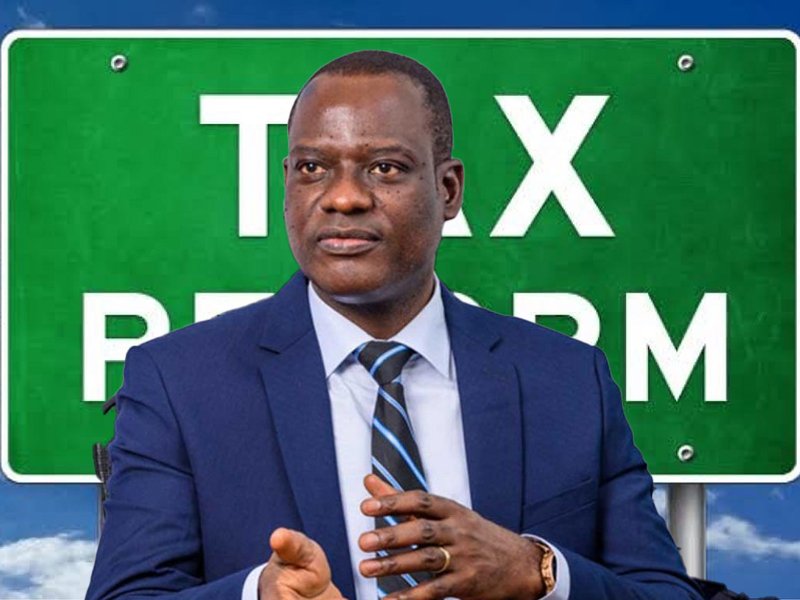
Chairman of the Presidential Committee on Fiscal Policy and Tax Reform, Taiwo Oyedele, has firmly debunked claims that Nigeria’s ongoing tax reforms will allow the government to directly deduct money from citizens’ bank accounts.
Speaking during an interview on Channels Television, Oyedele emphasised that no transaction description, transfer size, or account balance will lead to automatic deductions by the government.
“Any amount of money you transfer—whether you call it income, gift, savings or anything else—it doesn’t matter how you describe it. Nobody will debit your bank account,” he said.
Oyedele explained that Nigeria’s tax system under the reform remains self-declarative, meaning individuals and businesses are responsible for reporting their income at the end of the year.
According to him, taxpayers themselves determine what portion of their funds qualifies as income and what does not, and then declare the appropriate tax.
Those who are legally exempt are only required to state their income and exemption status, without paying any tax.
He noted that widespread opposition to the reform has been fueled by misinformation, often driven by wealthy individuals who benefit from the old system but rely on fear to mobilise ordinary Nigerians against changes that protect them.
Oyedele pointed out that about 98 percent of bank account holders in Nigeria have less than ₦500,000, yet many of them believe their small balances are at risk due to misleading narratives circulating online.
He added that some high-earning individuals, including digital content creators, oppose the reform because they do not want to pay taxes on substantial monthly earnings, and instead promote claims that the government plans to debit ordinary Nigerians’ accounts.
The tax reform, he said, is designed to make taxation progressive, reducing the burden on low-income earners and small businesses.
As part of the reform package, a presumptive tax regime has been introduced, exempting businesses with annual turnover of ₦12 million or less.
Informal businesses that clearly lack the capacity to make taxable profits—such as roadside traders—have also been identified for automatic exemptions.

Oyedele further disclosed that a tax harmonisation framework has been developed with the Joint Revenue Board to curb multiple taxation by state and local governments, with several states already adopting the framework.
He acknowledged that vulnerable Nigerians rarely have a strong presence on social media to defend policies that favour them, but insisted the reform prioritises their protection.
“This reform is built around fairness,” Oyedele said. “And no matter how it is described, nobody will debit your bank account.”